Categories
Uncategorized

Blog #10

The first thing I realized after going back and looking through my old blogs is… I did it and it wasn’t as scary as I thought it was going to be! Taking it step by step, week by week, helped me slowly build my knowledge base and not feel overwhelmed. I’ve learned that the research process is just that – a process. Some of my takeaways, or things that I am not just going to forget once this semester is over are:

  • the differences between quantitative and qualitative research
  • the different types of studies/experiments
  • the different types of surveys
  • what makes an experiment valid

Albeit the stats part of it is still a bit scary and confusing, I feel like I have gotten a great base knowledge for research and how to conduct it. This is exactly what I was looking to get out of this class. In the social service and education realm we hear a lot of buzzwords such as “research-based”, “evidence-based” and “data driven” interventions yet, not very many of us know what actually goes into these systems. Knowing the process and how the tools I am using are created will help me as a social worker in order to adapt and develop systems to fit my clients and their needs. Research may not be my favorite part of the job, but it is something that plays a pivotal role in shaping the work that I do and the lives of my clients.

And now that we are done with this class, I am sure all of my fellow classmates feel exactly like this:

Categories
Uncategorized

Blog #9

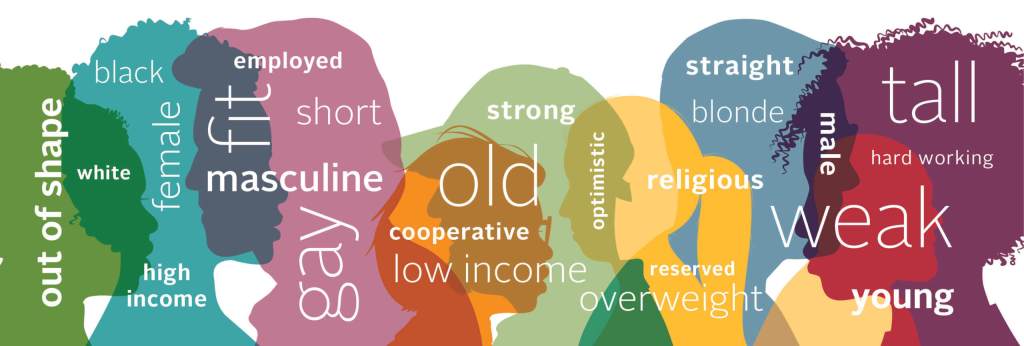
Before last week’s class, in my mind ethical research meant following policies implemented by the agency I work for as well as NASW’s code of ethics. One of the biggest topics both usually address is consent on behalf of the participant. This week I learned that it is essential that not only participants be aware of what the research entails, but also of the possible consequences. I thought this was interesting because research that involves experiments need some sort of anonymity in order to determine if what they are testing works. I am curious to see how researchers in this situation handle consent forms. Another big takeaway for me was the fact that as researchers, we have to recognize our own ethics and bias to ensure that we do not compromise the research. Our political values, possible ingrained stereotypes and cultural values might have an impact on the way we proceed with our research projects. For example, I know that for my research project I need to take a step back and look at it from a third party perspective. Because I am dealing with a population of my own culture, I cannot assume that I know the cultural values. I have to leave my personal experience and values aside in order to be able to let the data speak for itself.

Categories
Uncategorized

Blog #8

Planning and organizing is probably one of my biggest strengths, and frankly, it is something that I throughly enjoy. I am very type-A and having things organized provides a clear path for my brain to function. For the literature review paper, I had a very meticulous process (I was an Englis/Education major in undergrad so basically I received a degree in planning haha). I started by sorting the articles from most relevant to least relevant, numbering them, reading and highlighting important parts, and then creating a document with key points of each one in numerical order. After that, I revised this summary and looked for common themes in each article. I then created an outline for my lit review and referenced article numbers for citations. I plan to be as meticulous for my research proposal. I am going to start by reviewing the rubric (called backwards planning in the education realm) and create a skeleton of an outline to make sure I hit all the marks that are required. After that, I will review class PowerPoints to fresh my memory of the topics I will be including in my paper. Next, I will be reading the methods section of a few articles I found during last week’s class activity, in order to decide which scale I will be using and to have a baseline for my own paper. Lastly, I will complete the rest of the outline, plugging in citations as needed. The final step is to write my paper, but it will basically be written at this point!

Categories
Uncategorized

Blog #7

After tonight’s class I have a better understanding of the different research designs that are applicable for my research project. Initially, I thought I would be using a qualitative method to assess a parents’ Latino cultural values. However, I realized that I will actually be using a mixed methods design. My survey will consist of both quantitative data collection as well as qualitative, open-ended questions. They will be collected simultaneously, based on available participants (CPS parents, aka parents from a large urban public school). Utilizing this method will allow me to cast a wider net of information. I have a feeling there might be a correlation between Latino cultural values and sociodemographic factors; for example, I think there may be a correlation between an individual’s identification with their Latino culture and whether they are first, second, or third generation. Additionally, I also believe the neighborhood in which they live in, and who they surround themselves with, might also be another factor. Collecting my participants sociodemographic information may be a useful piece of the puzzle in providing more background information that will allow for more connections to be made. It is important to be able to identify the appropriate research design for my study because there is not a lot of research on my topic out there. Laying the foundation and providing as much information as possible will make it easier to pick up where I leave off and complete other research studies.

Categories
Uncategorized

Blog # 6

As a researcher, I believe I tend to gravitate towards qualitative research methods. I think this is due to my learning style and me being an extrovert. I learn best from having discussions and listening to different perspectives. My favorite part about school is being able to have conversations with my classmates who have a different background and experience than myself. The idea of being able to talk to people and learn about them interests me (even if it is through survey). I fully admit that I tend to shy away from quantitative because of the math component. I was an English major in undergrad, and math and I just do not mix sometimes. Just thinking about big sets of numbers scares me. It is important for me to recognize these biases in my choice of research method because some research will call for using a quantitative method, and I must be able to recognize that. I also need to recognize when I need help, so as not to compromise the research. My current research project proposal will require a combination of both quantitative and qualitative, so I am already thinking about how I will tackle this!

Categories
Uncategorized

Blog #5

I would like to start by saying that I believe hate is a strong word. That being said, I would say statistics dangles on that line, while not crossing it (along with chemistry and trigonometry!). I think my dislike for statistics could have been predicted since elementary school, when it was quite obvious that math was not my thing. High school and college did not seem to make that situation any better – yielding more frustrations. Then, it all culminated last semester, when I had to take a class titled, “Statistics for people (who think) they hate statistics.” It was online and self-taught, which essentially put the nail on the coffin for me. I tend to learn better when things are hands on and when there are examples and interactions/discussions to build on the material. This course, which was my first taste of statistics, left me feeling frustrated and confused. I believe that doing the worksheets in our groups will help me appreciate statistics more fully. I feel that the students in our class have built a great support system in each other, and it would be helpful to complete these assignments together and practice as a class. I understand that statistics are important because data drives change. Without being able to prove there are certain trends, we cannot receive funding and support to be able to make a difference. That is why I am willing to give statistics another try! Let’s do this!

Categories
Uncategorized

Blog #4

The reason I chose to research ADHD and stigma within the Latino community was because of my own upbringing. I grew up in a super Catholic family, and being first generation, I had to break through many preconceived notions that my family had. The traditional gender roles, urban myths and remedies were all challenged when I went to school and learned new things such as feminism and basic science (medicine). This dichotomy continued to present itself as I began to work with Latino families upon entering the workforce. I noticed that Latino parents, especially if they were immigrants or first generation, grew up with the same beliefs as I did. That is why I wanted to find a connection between Latino cultural orientation and stigma of ADHD, which ultimately affects diagnosis rates and treatment. This personal connection with the topic might be my bias. I am convinced that there is a connection between Latino cultural values and stigma of mental health issues. It is important for me to be aware of this bias when writing my literature review because I have to be able to present the other side and refute it in order to make my research valid. However, at the end of the day, I do not think that my bias will affect my conclusions. All of the articles that I have read so far state that researchers believe there is a connection, but this topic has been under-researched. Moving forward, in order to addresses this bias, I will try to find articles that discuss what strengths Latino cultural values provide in the community.

Categories
Uncategorized

Blog #3

One of the most important things I have taken away about research from the readings is the importance of recognizing valid research in order to be able to assist our clients more appropriately. Well-done research=valid results. Being able to evaluate and collaborate with the agency we work for through the research process will help establish evidence-based practices that are proven to aid in our efforts as social workers. Research has the potential to discover and explain a phenomenon in the field, while also work on finding solutions that are proven to work. For this reason, social workers should think about research as a tool that is a part of their job, not as a separate entity. Social workers do not need to choose between doing research and working with clients. Both things intertwine as research is needed for social work practice to be effective. One cannot exist without the other.

Categories
Uncategorized

Blog #2

As we begin the research process, I cannot help but feel a little intimidated, overwhelmed, and quite frankly, scared. Although I have completed literature reviews in the past (I was an English major as an undergrad), they were never with the purpose of writing a research paper related to human research and studies. I am not sure I have what it takes to write this particular type of literature review. The terminology in our readings and identifying things such as the independent and dependent variable make my head spin… and let’s not even get started on the statistics part of it! There is an inside joke amongst english majors that you either do well in math or english but never both, and I am definitely not a numbers person. I see numbers and my brain starts to shut down. And lets not even talk about what happens when I see numbers and letters! However, I must say that going into this research process, I am comforted by the fact that my number one strength is that I am very organized and detail-oriented. I believe this will help me in the process of conducting my research, compiling it, and creating an outline for my paper. I also think having been an english major will help me because I have written many papers in my day; although, I will need to practice my APA writing because I have been programed to write in MLA for so long. Practice makes perfect, right? No better time to start than now!

Categories
Uncategorized

Blog #1

Hola! My name is Karina and this is my 5th year at Dominican. I received my undergraduate degree from DU in English Literature with a Concentration in Secondary Education back in 2015. Although I decided not to teach, I have been working in the field of education since graduation. Working with opportunity youth in nonprofit, I found my niche. I always knew I wanted to work with students, but had a hard time pinpointing to what capacity. After serving as a program director for almost five years and absolutely loving it, I made the decision to return to school in the only field that made sense for me – social work. 

As an English major, I have some experience with research papers and all of the fun things that come with them such as literature reviews, searching for sources, reviewing sources, and writing a persuasive argument. However, after completing the readings for this week, I am anxious about this course because the research seems so much more scientific than my previous experience. I know this course will take us step by step through the process, but I can’t help but feel a bit overwhelmed at the moment. There seems to be so many time-consuming steps to the literature review and research paper, it is intimidating. I am a super organized person so I know that will be an advantage; but I know I need to establish deadlines for myself in order to not feel overwhelmed with the workload. Additionally, another concern I have is APA format. I was conditioned to write in MLA format as an undergrad, and am very much still getting the hang of writing in APA. It makes me feel more at ease that many of my classmates have expressed being on the same boat. We will get through this together!

Design a site like this with WordPress.com
Get started